MCP, A2A, AG-UI: The Three Protocols of the Agentic Stack

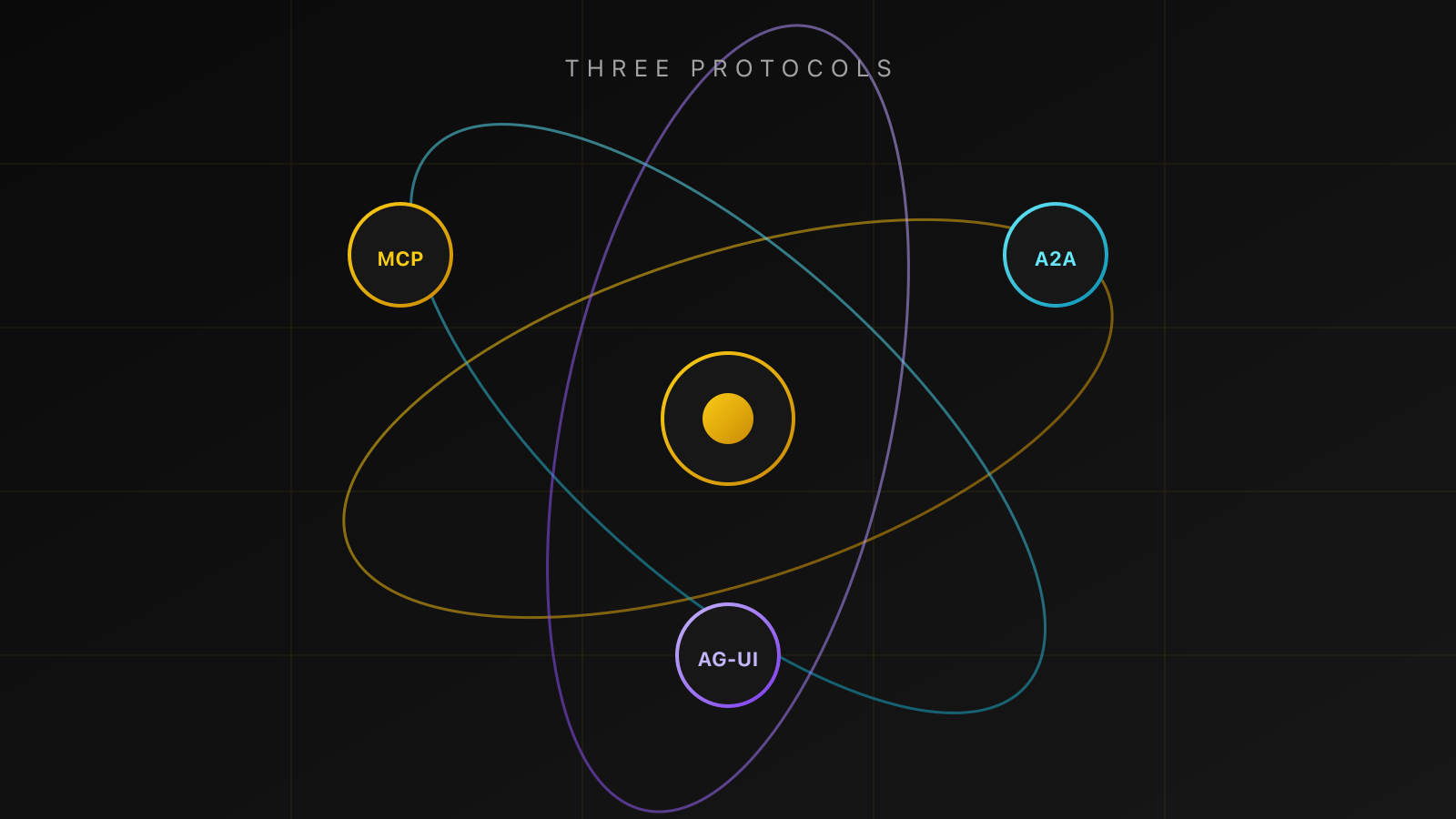
For two years, agent demos looked the same: a chat box, a handful of hard-coded tools, and a brittle chain of prompts. That era is ending. What replaced it is not a better model — it is a protocol layer. Three open standards now define how agents talk to the world: MCP for tools and data, A2A for other agents, and AG-UI for the humans who still have to trust the outcome.
MCP: how an agent uses tools
The Model Context Protocol, donated to the Linux Foundation's Agentic AI Foundation, is the USB of agent tooling. A host connects to one or more MCP servers; each server exposes tools, prompts, and resources behind a stable schema. The model never executes anything on its own — it proposes a call, your application runs it, and the result comes back as structured context.
That boundary matters. Once tools are schema-defined and host-enforced, you can swap models, add OAuth, log every call, and ship the same capability to Claude, GPT, Gemini, or an open-weight runtime without rewriting the product. In 2026, MCP support is table stakes for any serious agent platform — not because the protocol is fashionable, but because custom tool glue does not survive a second client.
A2A: how agents talk to each other
MCP solves agent-to-tool. It does not solve agent-to-agent. That is A2A: Google's Agent-to-Agent protocol, also under the Linux Foundation, with IBM's ACP folded into it. A2A gives independent agents a way to discover each other, publish capabilities, and negotiate tasks across trust boundaries — your booking agent talking to a partner's hotel agent without either side owning the conversation.
The practical consequence is organisational. Multi-agent work inside one company can still be a private harness. Cross-company work needs a shared language for identity, capability cards, and discourse. If your product will ever be called by someone else's agent — or call theirs — A2A is the protocol that keeps that relationship from becoming a one-off integration.
AG-UI: how agents talk to people
The third leg is the one most teams still skip: Agent-User Interaction. AG-UI standardises how agent state, tool execution, and human decisions stream into a frontend. It is what turns a black-box run into a shared surface — a plan the user can see, an approval they can grant, a hand-off they can take.
Without AG-UI (or an equivalent contract), every product invents its own streaming events, approval widgets, and error states. That is fine for a prototype. It is lethal once you have three surfaces — web, mobile, voice — and a compliance team asking where the human was in the loop. Generative and streaming interfaces are not a visual flourish; they are the UX of autonomy.
One stack, three jobs
Think of it as a division of labour. MCP is how agents act on systems. A2A is how agents collaborate across organisations. AG-UI is how agents remain legible to people. Ship all three and you have an agentic product. Ship only MCP and you have a tool-using chatbot. Ship only A2A and you have a network no one can supervise. Ship only a pretty chat UI and you have a demo.
At Lopezi we treat these protocols as design material, not just plumbing. An MCP tool is a product decision about what the agent may do. An A2A card is a product decision about what partners may ask. An AG-UI stream is a product decision about what humans need to see before they trust the next step. The engineering follows from those choices — and the choices are what separate durable systems from expensive demos.
What to ship first
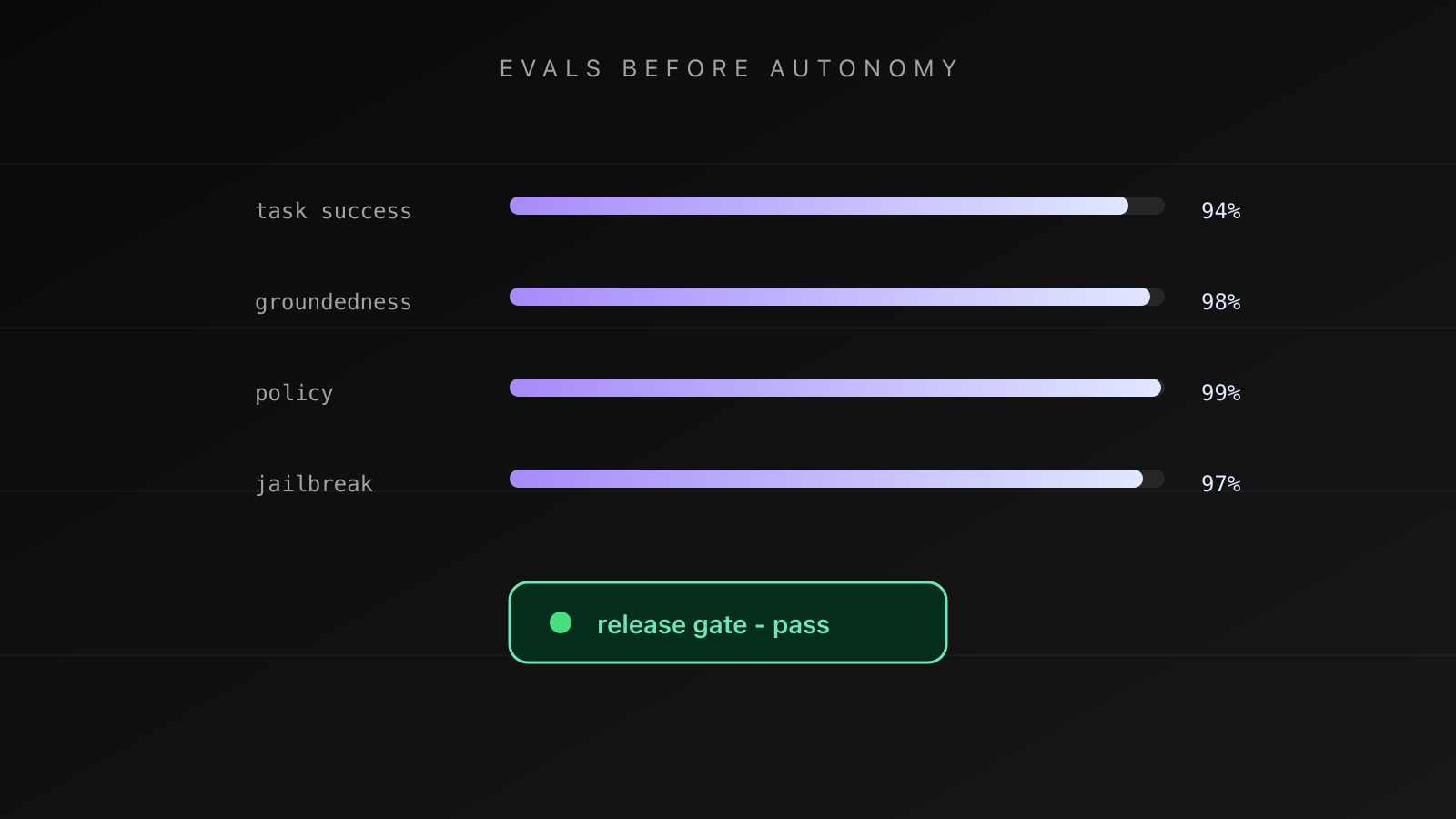
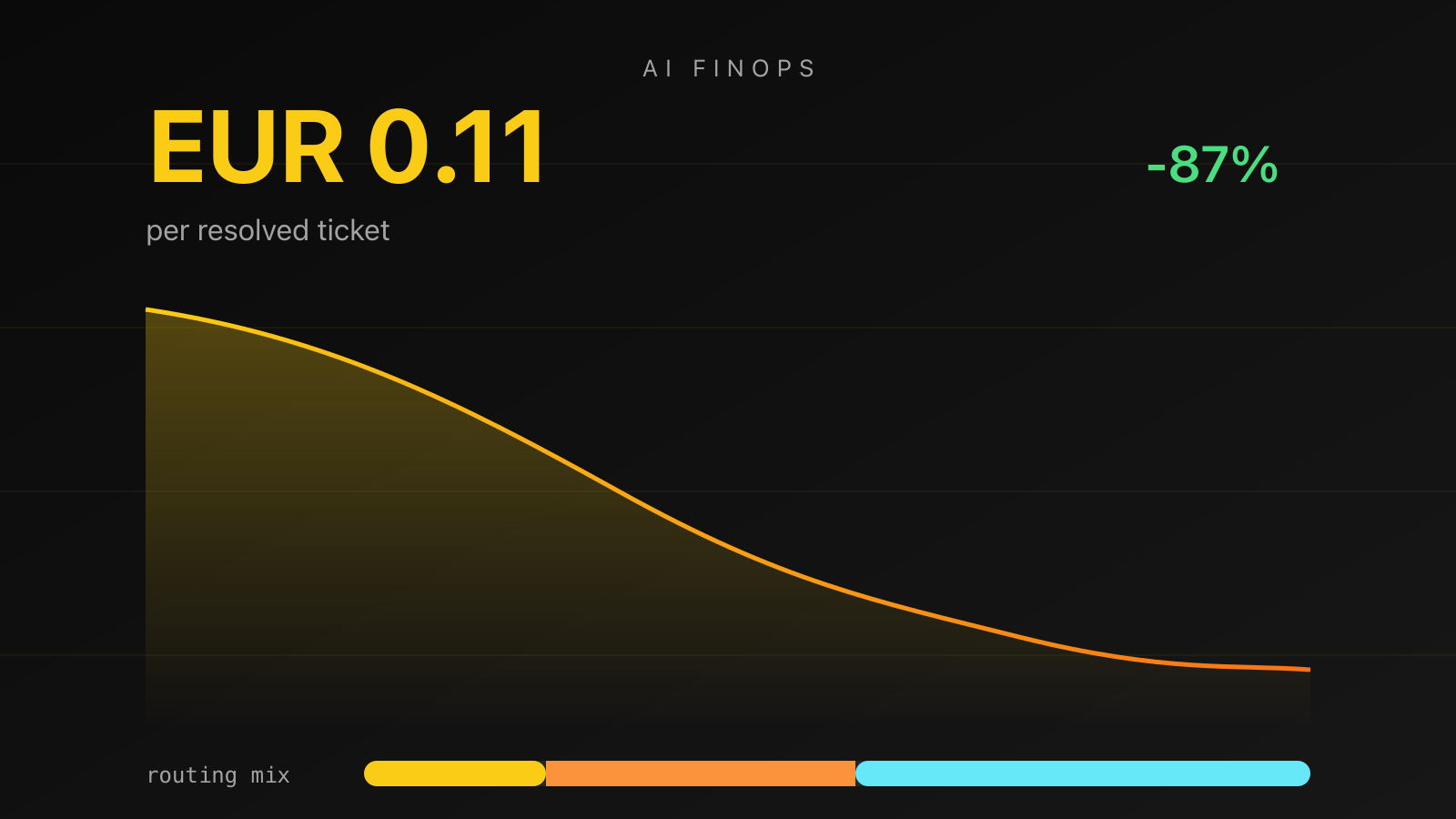
Start with MCP on the one workflow that already earns its keep. Add AG-UI so that workflow can ask for approval without a custom socket protocol. Introduce A2A when a second organisation — or a second internal agent team — needs to call you without a private webhook. Measure each step with evals and cost gates, not with "it felt smarter."
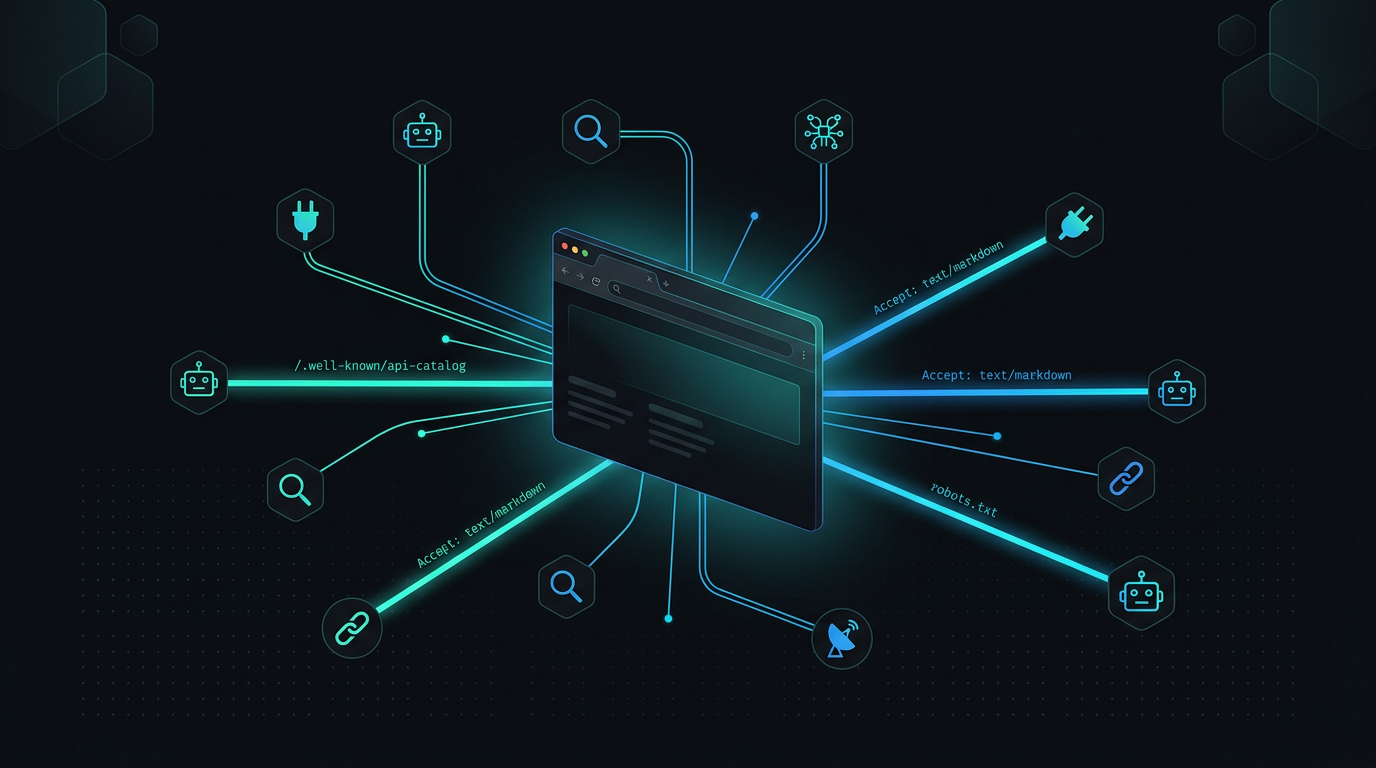
If you want a concrete starting point, our agent-readiness scan covers the discovery half of this stack — robots.txt, Markdown negotiation, MCP cards, OAuth, Agent Skills — and maps the gaps to a prioritised plan. Book a call at calendly.com/lopezi/ and we will tell you which of the three protocols you are missing before you write another prompt.
Ready to ship agents you can trust?
Let's map one workflow worth handing to an agent — and what it would take to govern it.
Schedule a consultation